Embracing the Sacred Pause: What Happened When I Stopped Rushing Through My Life
[27 MIN LISTEN]
I became an entrepreneur because I wanted freedom.
I wanted to create a life that gave me more flexibility with my family, more room for creativity, and more opportunities to pursue the things that genuinely interested me.
And yet, earlier this year, I found myself confronting an uncomfortable realization.
I was rushing through the very life I'd worked so hard to create.
My days had become a constant cycle of consuming information, creating content, managing responsibilities, and thinking about whatever needed to happen next.
Even when I had a few moments to myself, I struggled to leave them unoccupied.
There was always something else I could learn, check, organize, or accomplish.
And somewhere in all that activity, I had started losing touch with the experience of simply being present.
That's when I decided to take what I began calling a sacred pause.
What Is a Sacred Pause?
A sacred pause is an intentional decision to create space between the demands of everyday life and the things that genuinely deserve our attention.
It doesn't necessarily mean taking an extended vacation, stepping away from your career, or eliminating your responsibilities.
Instead, it's about reconsidering the pace you're keeping and whether that pace actually supports the life you want to live.
For some people, a sacred pause might mean taking a few days away from work.
For others, it could mean setting firmer boundaries around their phones, simplifying their schedules, or making time for creative interests that have been pushed aside.
The important part is the intention behind it.
You're creating room to reconnect with yourself instead of automatically responding to every demand, distraction, or expectation.
And sometimes that shift begins with a surprisingly simple question:
Am I actually experiencing my life, or am I spending most of my time managing it?
When Productivity Becomes Your Default Setting
One of the most interesting things about modern life is how easily we can fill every available moment.
We listen to podcasts while walking, audiobooks while cleaning, and educational content while getting ready for the day.
We check emails between activities and scroll through social media whenever we have a spare minute.
None of these habits is inherently problematic.
Learning can be enriching. Technology can be useful. Productivity can help us pursue meaningful goals.
But when we become uncomfortable with having an unoccupied moment, it's worth asking what we've come to expect of ourselves.
I realized I'd been treating nearly every pocket of free time as an opportunity to accomplish something.
And as a business owner, there was always another project or idea waiting for my attention.
I genuinely enjoy my work, which made it even harder to recognize when that constant activity had stopped feeling supportive.
I didn't need to stop caring about my business.
I needed to stop behaving as though every possible task required my immediate attention.
There's a meaningful difference between being committed to your work and allowing work to occupy every corner of your life.
Why Slowing Down Can Feel So Uncomfortable
When I first decided to reduce my commitments for the summer, I expected to feel relieved.
And I was.
But I also noticed how deeply ingrained some of my habits had become.
I'd reach for my phone without thinking about it.
I'd open my task management app and refresh lists that didn't need refreshing.
I'd check for something urgent, only to discover there was nothing that required my attention.
It was almost comical.
I'd intentionally created space to enjoy my life, and then I'd catch myself searching for something to fill it.
I began to recognize how accustomed I'd become to the feeling of being switched on.
And when I stopped responding to every impulse to check something, I gradually found it easier to settle into whatever I was doing.
Sometimes rest feels unfamiliar before it feels restorative.
That doesn't mean we're doing it wrong.
It may simply mean we're adjusting habits we've repeated for a long time.
Creating More Space for Motherhood and Presence
One of my biggest motivations for slowing down was my children.
They're growing up so quickly, and I became increasingly aware of how fleeting this particular season of family life is.
I wanted to spend more time being fully immersed in their world.
The swimming pools, messy popsicles, imaginary adventures, spontaneous outings, and little moments of wonder that make childhood so magical.
Of course, being present with young children isn't always peaceful.
There are interruptions, big emotions, and plenty of moments when everyone needs something at once.
I wasn't trying to create a perfectly calm summer or become a mother who never feels distracted.
I simply wanted to be more intentional about where my attention was going.
And I began to notice how often the things pulling me away weren't genuinely urgent.
An email could wait.
A task could be moved to another day.
An idea could be written down instead of immediately turned into a project.
I could choose to be present for the experience happening in front of me.
That felt especially meaningful because the freedom to spend time with my family was one of the reasons I'd built my business in the first place.
How Rest Helped Me Reconnect With Creativity
Something else happened when I began creating more space.
I started feeling more creatively inspired.
I've always loved writing, but I found myself reconnecting with the playful, imaginative side of it.
The kind of creativity that doesn't need an audience, a deadline, or a business strategy.
I could explore an idea because I was curious about it.
I could write something simply because I enjoyed the process.
And I didn't have to decide whether every creative interest was going to become something bigger.
That was incredibly freeing.
As adults, we often evaluate our interests based on what they produce.
Will this make money? Is it worth my time? Am I good enough at it? Could it become a business?
But creativity can be valuable without having a measurable outcome.
It can help us explore our interests, express ourselves, and reconnect with the things that bring us joy.
Sometimes the most meaningful thing we can do is give ourselves permission to create without expectations.
Rest Isn't the Opposite of Progress
One of the biggest misconceptions about rest is that slowing down means we're falling behind.
We associate growth with activity, accomplishment, and visible momentum.
And when we stop moving at our usual pace, we may worry that we're losing everything we've worked to build.
But rest can support our ability to think clearly, make intentional decisions, and reconnect with what matters.
Sometimes it creates room for new ideas.
Sometimes it helps us recognize that we've been carrying more than we realized.
And sometimes the benefit is simply that we feel rested.
That is enough.
I love thinking about the rhythms of nature when reflecting on this.
There are seasons of visible growth and seasons of quiet.
We don't expect the natural world to operate at the same pace all year long.
Yet we often hold ourselves to that expectation.
We want to keep growing, producing, learning, improving, and expanding without making room for integration.
But sustainable growth requires flexibility.
There are times when pursuing an ambitious goal feels exciting and supportive.
There are other times when what we need most is an opportunity to slow down.
Neither season has to diminish the other.
How to Create Your Own Sacred Pause
You don't need to take an entire summer off to experience the benefits of a sacred pause.
You can begin by noticing the moments when you're automatically filling space or responding to expectations that may not actually require your attention.
Here are a few ways to explore that in your own life.
1. Notice what you're treating as urgent
Pay attention to how often you interrupt yourself to check something.
Ask whether it genuinely needs your attention right now or whether you're responding out of habit.
You may be surprised by how much can wait.
2. Make room for something you genuinely enjoy
Choose an activity that doesn't need to become productive.
Read a novel. Work in your garden. Write a poem. Try a new recipe. Spend time outside.
Allow yourself to enjoy the experience without turning it into another goal.
3. Practice being fully present for one ordinary moment
You don't need to spend an entire day disconnected from technology.
Try putting your phone away during a meal, leaving it inside while you sit outdoors, or giving someone your full attention during a conversation.
Notice how the experience feels when you're not dividing your attention.
4. Reconsider one unnecessary commitment
Look at your schedule and ask whether everything on it still reflects your priorities.
Sometimes creating space means saying no to something good so you can say yes to something more meaningful.
5. Let your version of rest fit your actual life
A sacred pause will look different depending on your responsibilities, resources, and season of life.
You might have an afternoon available, or you might have ten minutes.
Start with what's realistic.
You don't need to create an elaborate ritual or make your life look a particular way for the pause to matter.
Coming Back to Yourself
Looking back on my summer, the most meaningful part of slowing down wasn't simply having fewer things to do.
It was remembering how much I enjoy the life I've created when I allow myself to be fully present for it.
I had more room for my children, my creativity, and the little experiences that make ordinary days memorable.
And I realized I didn't need to wait until everything was finished before I could enjoy those things.
The work will continue.
The responsibilities will still be there.
There will always be new ideas, opportunities, and things that need attention.
But I can choose how I respond to them.
And I can make room for the experiences that matter to me now, rather than postponing them for some imaginary future when life finally becomes less busy.
A sacred pause isn't necessarily about stepping away from your life. Sometimes it's how you find your way back to it.
In Episode 111 of The Life with Liz Podcast, I'm sharing the personal story behind my decision to slow down, what surprised me about the experience, and how reconnecting with creativity and presence changed the way I approached my summer.
If you'd like support reconnecting with yourself and exploring what matters most to you, you can also begin with my free training.
Episode transcript:
This is an auto-generated, unedited episode transcript. Please excuse any tyops.
Welcome to The Life with Liz Podcast, the place to be if you wanna go from invisible to vibrant in your life and embrace the power you didn't know you had inside of you. I'm your host, Liz Fleming, business owner, mom, military spouse, entrepreneur, founder, CEO, and life coach, who is passionate about helping ambitious women like you step into their power and their purpose on purpose so they can experience as much joy, success, satisfaction, and abundance as humanly possible. Now without further ado, let's dive right into this episode.
Hi friends, and welcome back to The Life with Liz Podcast! It feels so good to be sitting here with you again. If you've noticed that things have been a little quieter around here, there's a reason for that. And it's actually what I want to talk about today. Earlier this year, I had one of those realizations that stops you in your tracks. I was going about my usual day, thinking about everything I needed to do, all the ideas I wanted to explore, the content I needed to create, and the things that were waiting for my attention. And suddenly I had this moment of, wait a minute. What am I doing? I became an entrepreneur because I wanted freedom. I wanted to create a life that allowed me to be present with my family, pursue my interests, write, explore new ideas, and actually enjoy the things I was working so hard to build. And somehow, I had become so busy managing that life that I wasn't fully experiencing it. I was rushing through everything. I would be doing one thing while thinking about the next three. I'd have a few minutes to myself and immediately reach for my phone, check a task list, or find something productive to do. Even when I was technically relaxing, my mind was somewhere else. And I remember thinking, this is ridiculous. This is not why I created this life. I don't want to spend my days feeling like I'm running a race that nobody actually asked me to enter. So I made a decision. I was going to take what I started calling a sacred pause. And today, I want to share what that looked like, what surprised me about it, and why I think so many of us need to reconsider our relationship with rest, productivity, and the lives we're trying to create. Because this experience reminded me of something I think we all know deep down but sometimes forget. We're allowed to enjoy our lives while we're living them. PART ONE | When Everything Starts Feeling Urgent I think one of the strangest things about my experience was that there wasn't one enormous problem I needed to solve. I wasn't waking up every day thinking, I hate my life, or I need to change everything. I love so much about the life I've created. But there was this underlying sense of urgency that had started following me everywhere. If I wasn't producing something, I was consuming something. I was listening to podcasts, reading books, taking in ideas, learning new things, checking social media, thinking about content, planning projects, or trying to figure out what needed to happen next. And listen, I love learning. I love creating. I love my work. But I had reached a point where I wasn't leaving much room between all that input and output. I was treating every spare moment as an opportunity to accomplish something. And I started to notice how disconnected that made me feel. I would be physically present with my kids, but part of my attention would still be somewhere else. Maybe I was checking something on my phone, thinking about work, or mentally organizing the rest of the day. And the thing is, I wasn't necessarily doing anything wrong. There are real responsibilities that come with being a business owner and a mom. But I had to ask myself whether everything I was treating as urgent was actually urgent. Because there's a difference between having responsibilities and living as though every responsibility is an emergency. And I had gotten really good at creating my own emergencies. I think a lot of us do this without realizing it. We keep checking things because we're used to checking them. We keep adding to our lists because there's always something else we could be doing. And eventually, that constant activity starts feeling like the normal way to live. But I don't think we're meant to experience every waking moment as something we need to optimize. I was tired of feeling like a content-producing robot. I'm a human being. I have interests and ideas and dreams and emotions, and I want to have enough space in my life to actually experience them. And once I really acknowledged that, I couldn't ignore it anymore. PART TWO | What My Sacred Pause Actually Looked Like PART TWO | What My Sacred Pause Actually Looked Like So when I decided to slow down for the summer, I didn't shut down my businesses, disappear from the internet, or abandon my responsibilities. And I want to be really clear about that because I think this is where the idea of taking a pause can get misunderstood. My responsibilities didn't magically disappear. I still had businesses to run, existing commitments to honor, a household to manage, and two young children who needed me every single day. What changed was how I approached those responsibilities. I started getting much more intentional about what genuinely needed my attention and what I'd simply convinced myself needed to happen right away. I wasn't neglecting my work. I was honoring my commitments while giving myself permission to stop creating additional work just for the sake of staying busy. And I recognize that not everyone has the same flexibility with their schedules. I'm incredibly grateful for the flexibility I do have, and I don't take that for granted. But I also think this is important because taking a sacred pause doesn't have to mean taking time off work. Sometimes it simply means recognizing that you don't have to fill every available moment with something productive. You can meet your responsibilities and still make room for yourself. For me, that meant making some very intentional decisions about what I was going to prioritize. I stepped back from hosting my usual summer events, apart from commitments to my existing members and customers. I gave myself permission to do less in my business for a while. And I decided that when I was spending time with my kids, I wanted to actually be there with them as much as possible. I didn't want to constantly split my attention between what we were doing and whatever was happening on my phone. I wanted to play. I wanted to swim and make smoothies and deal with sticky popsicle fingers and get completely absorbed in whatever imaginary world my children had invented that afternoon. I wanted spontaneous adventures and beach trips and watching butterflies and building forts. And listen, I was still parenting two young children, which, if you have little kids, you know is not exactly a relaxing sabbatical. I mean, let's be clear. My summer wasn't spent in a silent monastery surrounded by candles and people whispering affirmations. There were still messes, interruptions, sibling disagreements, and days when everybody needed something from me at the same time. But I wanted to be fully immersed in this season of our lives, even on the days when it was loud and chaotic and I was pretty sure motherhood was turning my hair gray prematurely. Because my kids are growing up so quickly. And there was this moment when I realized that this particular version of our family is only going to exist once. The ages they're at, the things they're fascinated by, the way they see the world, the way they want us to be part of everything. It's all changing, constantly. And I didn't want to look back and realize I spent those years distracted by things that could have waited. That doesn't mean I needed to be entertaining them every second or that I suddenly became some perfectly present mother. Absolutely not. It meant I wanted to be more intentional about when I was working, when I was available to them, and when I was simply allowing myself to enjoy our time together. I also wanted to make room for myself. For reading a book because I wanted to read it. For writing because I had something I was excited to explore. For sitting outside with an iced tea, watching a storm roll in, or enjoying a quiet moment without immediately asking myself what else I should be doing. Those things sound small, but they were exactly what I had been missing. [OPTIONAL PERSONAL STORY: Share one favorite summer memory with the kids. A funny, messy, ordinary moment would be perfect here.] PART THREE | The Surprising Resistance to Doing Less Now, here's something I found really interesting. When I first made this decision, I felt an enormous sense of alignment. I knew it was what I wanted. I felt excited about the space I was creating. But then I actually started living it, and I noticed something kind of ridiculous. I kept checking my phone. I would open Asana and refresh my task lists, almost automatically. I'd look for something that needed my attention. And then I'd realize, oh. There's actually nothing I need to do right this second. Everything is fine. I can just sit here. And that was such an interesting realization because I hadn't fully recognized how accustomed I'd become to checking, planning, and anticipating what needed to happen next. Even after I'd made the decision to slow down, some of those habits were still running in the background. It's almost funny when I think about it now. Here I was, sitting on my back deck with a book, my highlighters, and an iced tea, and some part of my brain was still convinced I needed to check whether there was an emergency happening somewhere in my task management system. Spoiler alert: there wasn't. And as I kept choosing not to respond to every little impulse to check something, I began to notice how much more settled I felt. I could focus on what was right in front of me. I could hear myself think. I could enjoy something without constantly interrupting the experience. I also realized that I'd been carrying a level of tension I hadn't fully noticed while I was in the middle of it. I had gotten so used to feeling switched on that it took some space for me to recognize how exhausting that had become. I know that being a military spouse, raising young children, and running businesses comes with its own set of demands and sacrifices for every family. I'm not suggesting everyone can take a summer off or dramatically reduce their responsibilities. But I don't think that's the point. The question is whether there are small ways we can stop adding unnecessary urgency to the lives we're already living. Because I didn't need to escape my responsibilities to experience a meaningful change. I needed to become more intentional about which things actually deserved my attention. PART FOUR | What Came Back When I Made Space One of the most beautiful things about this experience was discovering what happened when I stopped trying to fill every available moment. My creativity came back in such a wonderful way. I've always loved writing, but I found myself reconnecting with the playful, imaginative side of it. The part of me that wants to explore an idea simply because it's interesting. The part that can get excited about a sentence, an image, or a story without needing to know what it's going to become. And I felt like a kid again in certain moments. I could spend time creating something that had no obvious purpose beyond the fact that I enjoyed it. Maybe it was a poem about a thunderstorm. Maybe it was a few pages of creative writing. I didn't have to turn it into a project with a deadline or figure out how it fit into my business. I could just enjoy it. And that was incredibly freeing. I also started noticing more of the little things happening around me. The way the light looked outside. The butterflies in the yard. The funny things my kids would say. The moments of wonder that are so easy to overlook when you're constantly focused on what's next. And I've been thinking a lot about how closely presence and wonder are connected. When we're always mentally somewhere else, we miss so much of what's happening right in front of us. But when we slow down enough to pay attention, ordinary life can start feeling pretty extraordinary. We're going to explore that idea more in an upcoming episode about noticing miracles, because it's something I've become really fascinated by. For now, what I want to share is that creating space helped me feel more connected to myself and to my life. And from a spiritual perspective, that experience felt especially meaningful. This is a personal Year 7 for me in numerology, which is traditionally associated with introspection, reflection, and spiritual exploration. I know that won't resonate with everyone, and that's okay. But for me, the theme felt incredibly aligned with what I was experiencing. I felt this deep inner nudge to turn inward, become quieter, and pay closer attention to what was genuinely calling for my energy. And when I started honoring that feeling, things began to make more sense. I wasn't trying to force inspiration or clarity. I was finally giving myself an opportunity to notice what was already there. PART FIVE | Rest Isn't the Same as Giving Up I think one of the reasons slowing down can feel so difficult is that we've been conditioned to associate progress with constant movement. If we're not actively doing something, we start wondering whether we're falling behind. And if you're an entrepreneur, that pressure can be especially intense because there's almost always another opportunity, another idea, another way to grow. But I started asking myself a different question. What am I actually working toward? Because if the entire point of building a life with more freedom is to enjoy that freedom, why would I keep postponing the enjoyment? Why would I spend every day rushing toward some future moment when I finally get to relax? I think we can become so focused on creating a good life that we forget we're already living one. And rest is part of that life. It isn't something we have to earn by reaching a particular level of productivity. It isn't proof that we've lost our ambition. Sometimes slowing down is exactly what helps us recognize what we want to pursue next. And sometimes rest doesn't produce some extraordinary breakthrough. Sometimes you rest and you simply feel rested. That's valuable, too. I love thinking about the natural world when I reflect on this. Nature has rhythms. There are seasons of visible growth and seasons when things appear quieter. A tree doesn't spend every month producing leaves and blossoms, and we don't look at it in the winter and accuse it of being unproductive. We understand that those quieter seasons are part of its life. And I think we could offer ourselves a little more of that understanding. We're allowed to have seasons when we're building and expanding. We're also allowed to have seasons when we're reflecting, integrating, playing, resting, and exploring. And those seasons don't have to look the same for everyone. A sacred pause might be a few weeks of changing your priorities. It might be an afternoon without your phone. It might be choosing not to add another commitment to your calendar. It might be giving yourself ten minutes to sit outside and watch the trees moving in the wind. You don't need to book an expensive retreat or disappear to a beautiful destination. You can create small moments of retreat within the life you already have. CLOSING | Coming Back to the Life You're Living So as I look back on this summer, I think the biggest surprise was realizing how much I had been afraid, on some level, that if I stopped constantly managing everything, something would fall apart. And it didn't. My world kept turning. My responsibilities didn't disappear, but I was able to approach them with more intention. I had more space for my children, my creativity, and the experiences that make this season of life so special. And I realized that I don't want to wait until some future version of my life to enjoy being here. I want to enjoy it now. I want to notice the little things. I want to make room for the interests that light me up. And I want to remember that I'm allowed to change the pace of my life when the pace I'm keeping no longer feels right. If you've been feeling rushed or disconnected lately, I'd love for you to think about where some of that urgency might be coming from. Are there things you're treating as emergencies that really aren't? Are there moments in your day when you automatically reach for a distraction, even though nothing actually needs your attention? Is there something you've been wanting to do simply because you love it, but you keep telling yourself you don't have time? Maybe your sacred pause starts there. With one small decision to make a little more room for the life that's already happening around you. And I hope you'll remember that you don't have to earn that room. You deserve to experience your own life. Thank you so much for being here and sharing this conversation with me. It feels really good to be back. If you'd like more support reconnecting with yourself and creating a life that feels aligned with what matters most to you, I've linked my free training in the show notes. And in our next episode, we're going to explore something that became especially meaningful to me during this pause: the everyday miracles we can miss when we're moving too quickly to notice them. Until next time, sending you so much love.
Did that go by too fast? No worries. You can always find me over at elisabethfleming.com for more information about my programs, events, and how you can take your learning further with me. If you loved this episode, leave a review. It helps more than you know.
Thank you so much for tuning in. I'll catch you next time.
WANT TO GO A LITTLE DEEPER?
If something in this post brought something up for you, I’ve opened a small number of private coaching spots for the remainder of the year. I offer focused 60-minute Power Sessions and a three-session Intensive for women who want personalized support with whatever they’re navigating, working toward, or ready to understand more deeply.
You can learn more about private coaching and see what feels like the right fit for you here.
Connect with Liz:
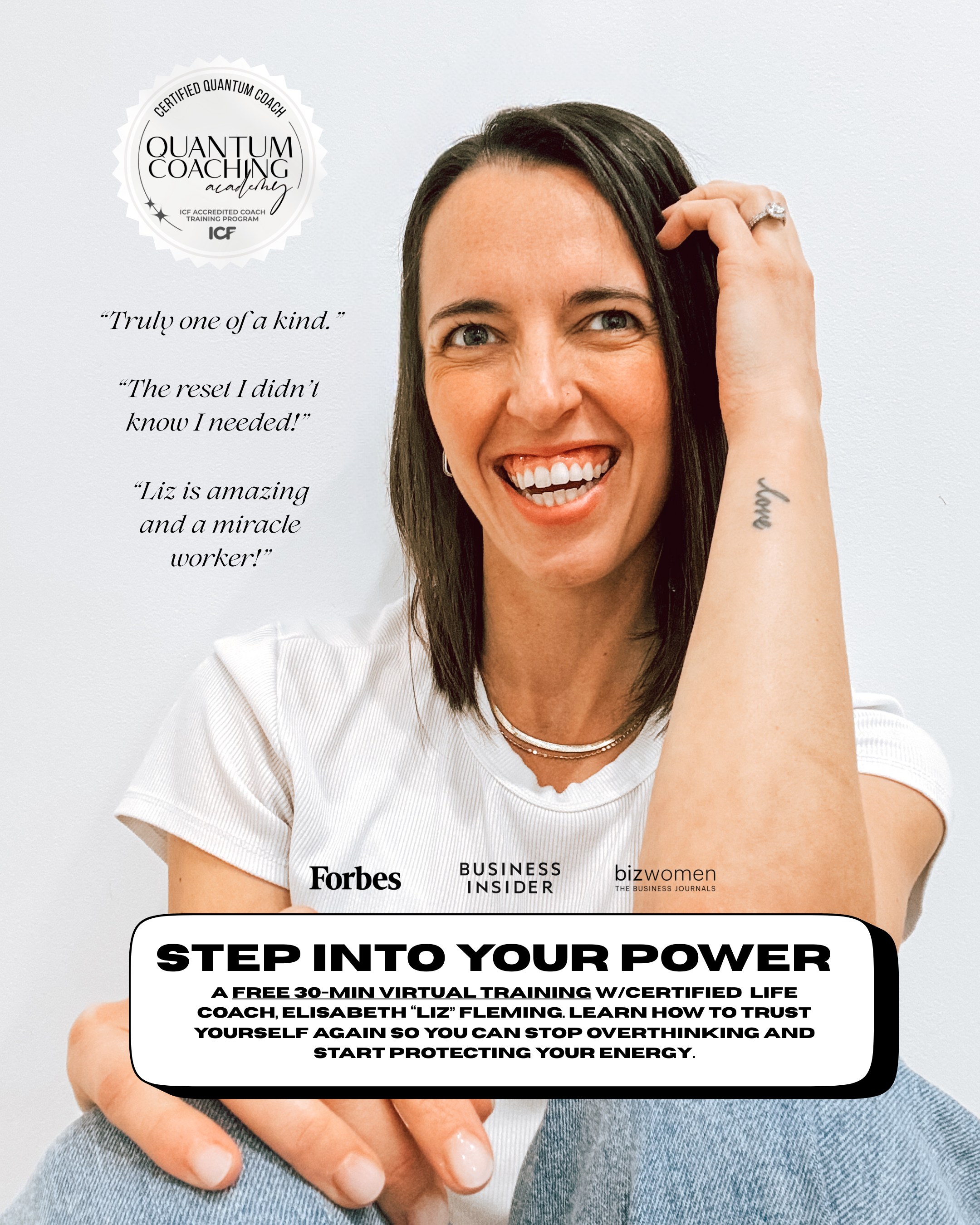
Watch Liz's FREE Workshop, Step Into Your Power:
Learn how to trust yourself again so you can stop overthinking and start protecting your energy. Watch now at elisabethfleming.com/free-workshop
Read Liz's Book:
Discover Liz’s bestselling book, Powerhouse: 3 Steps to Thrive as the Incredible Woman You Already Are — A Framework for Self-Love and Expansion: elisabethfleming.com/book
Resources:
Website: elisabethfleming.com/welcome
Instagram: @elisabeth.fleming
Podcast: The Life with Liz Podcast
If you loved this episode, rate and review it to help reach the women who need it most!
STEP INTO YOUR POWER
DISCLAIMER
The content and material presented on this podcast is for informational and educational purposes only. It shall not be construed as medical advice. The information and education provided are not intended or implied to supplement or replace professional medical treatment, advice, and/or diagnosis. The creator of this content does not dispense medical advice or prescribe the use of any technique as a form of treatment for physical, emotional, or medical problems without the advice of a physician, either directly or indirectly. The intent of the creator is only to offer experiential information to help the reader in his/her/their quest for emotional, physical, and spiritual well-being. In the event you apply any of the information provided from this content for yourself, the creator assumes no responsibility for your actions. Note: This post may include affiliate links! I may earn a small commission at no additional cost to you if you decide to click, sign up, or make a purchase.
