[18 MIN LISTEN]
If you’ve been wondering how to love yourself again, you’re not alone. Many women reach a point where self-love feels distant, confusing, or even impossible, especially after seasons of caregiving, burnout, or major life transitions. When your roles become louder than your identity, it’s easy to feel disconnected from who you are and what you need.
This isn’t a failure. It’s a signal.
Learning how to love yourself again starts with understanding what self-love actually means — and why it often feels so hard in real life.
What Is Self-Love, Really?
Self-love isn’t constant confidence or positivity. It’s the ability to stay in relationship with yourself, even when life feels overwhelming. It’s responding to your inner world with care instead of criticism.
When women ask, “what is self-love,” they’re often naming a deeper longing: the desire to feel safe, grounded, and connected to themselves again.
Why Self-Love Gets Lost
A lack of self-love doesn’t usually look like self-hatred. It looks like overgiving, numbing, suppressing emotions, and pushing through exhaustion. It looks like ignoring your own needs while showing up for everyone else.
Many women lose touch with themselves during early motherhood or periods of intense responsibility. Identity shifts quietly, and without space to process, self-connection fades.
How to Love Yourself Again
The path back to self-love begins with awareness. Noticing when you’re overstimulated. Recognizing when you’re reacting instead of responding. Allowing yourself to pause instead of powering through.
Practices like nervous system regulation, movement, meditation, and honest self-reflection create safety inside the body. From there, trust rebuilds.
Mirror work is one simple entry point. Looking yourself in the eyes and saying “I love you” isn’t about forcing belief — it’s about establishing relationship.
Self-Love Is a Relationship
Loving yourself again doesn’t mean becoming someone new. It means remembering who you are beneath the roles, expectations, and noise.
This relationship deepens over time, with patience and compassion.
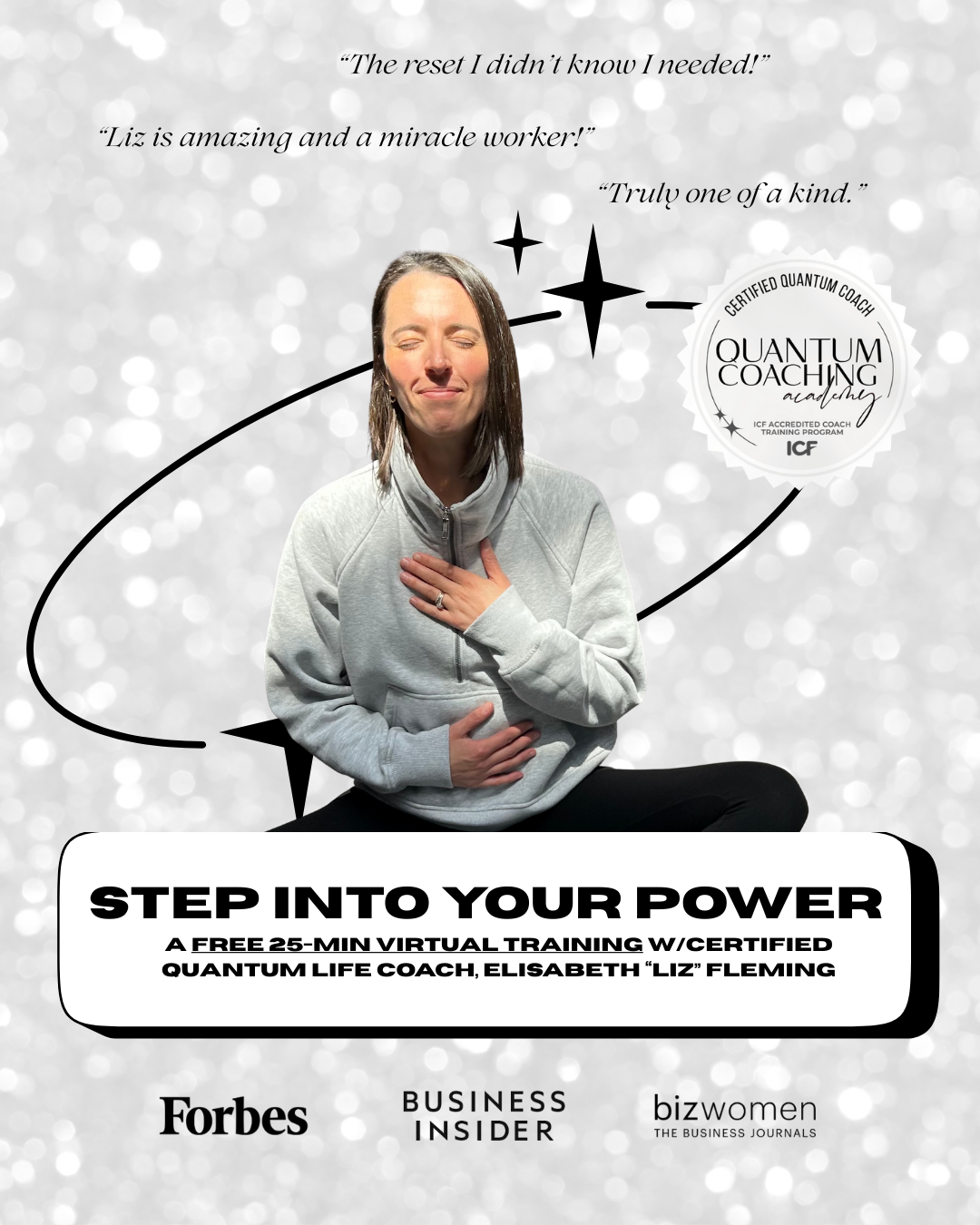
If you’re learning how to reconnect with yourself and stop self-abandonment, my free training Step Into Your Power is a supportive place to go deeper.
In my book Powerhouse, I go deeper into self-love practices and identity healing for women who feel disconnected from themselves.
Self-love isn’t something you earn. It’s something you return to.
Episode transcript:
This is an auto-generated, unedited episode transcript. Please excuse any tyops.
Welcome to The Life with Liz Podcast, the place to be if you wanna go from invisible to vibrant in your life and embrace the power you didn't know you had inside of you. I'm your host, Liz Fleming, business owner, mom, military spouse, entrepreneur, founder, CEO, and life coach, who is passionate about helping ambitious women like you step into their power and their purpose on purpose so they can experience as much joy, success, satisfaction, and abundance as humanly possible. Now without further ado, let's dive right into this episode.
Hello, hello! Welcome back to the Life with Liz podcast.
Today, I want to talk about something I know so many women are quietly asking, even if they don't always have the words for it yet.
How do you love yourself again when you don't feel like you always like yourself anymore?
Not in a surface-level way, or in a take a bath and light a candle way, but in the real, lived way. And I know that's a tough question to hear, and probably a question that so many of you have been sitting with, because girl, I have been there.
But this is the kind of self-love that feels steady when life is loud. The kind that exists when you're exhausted, overstimulated, pulled in 10 different directions, and wondering where you went.
This question comes up most often after a season of giving.
During motherhood, during caregiving, whether that's for little humans, or older humans.
After loss.
After burnout, during burnout.
While building a life where your roles become louder than your identity.
Which is something I talk a lot about in my book, Powerhouse. So if that's where you are, you are in the right place, my friend.
So what does self-love actually mean?
I want to start right at the top, because I use this term all the time. It's how I define my business, it's how I define the book, my programs.
And for many, when you see self-love, it feels pretty self-explanatory, but I just want to set the record straight for where I'm coming from.
One of the reasons self-love feels so hard is because most of us were taught the wrong definition.
Self-love isn't about feeling confident all the time. It's not about being positive all the time. And it definitely isn't about trying to fix yourself until you're more acceptable.
Self-love, in its truest form, is the ability to stay connected to yourself even when life feels messy.
And may I even change that to say, especially when life feels messy.
It's that willingness to listen instead of override, to respond instead of react, and choose yourself without abandoning the people that you love.
And simultaneously, without abandoning yourself.
When women ask what is self-love, or someone types it into Google, what they're often really asking is, how do I stop disappearing inside of my own life.
And that's where this conversation begins for this episode.
I know what it's like to lose yourself slowly.
We all have seasons of life like that.
For me, it happened definitely in early motherhood. My first pregnancy, my first baby, my first postpartum time.
I felt really isolated.
Just in complete and total shock. Non-stop adrenaline. Fight or flight. Overstimulation. Exhausted. And definitely confused, no matter how prepared I thought that I was.
My days revolved around caring for everyone else.
And somewhere along the way, my inner world went really quiet.
Looking back, fear was taking the wheel, for sure. I was so afraid that I was gonna make a mistake, or that I was going to forget something or do something wrong.
And I lived in that fear, and I let it define my waking life.
And I want to be really clear that I wasn't unhappy in a dramatic way.
I was feeling numb. I was feeling disconnected.
Of course, I was so grateful and so blessed to have this new special edition to our family.
But I felt like I was going through the motions while quietly wondering why everything felt harder than it should.
Like, was this supposed to be this hard?
And that wasn't just motherhood. That was being a woman in today's world, given that new role, on top of being an entrepreneur, a business professional, a wife, a daughter, a sister, a friend.
A community member, a volunteer, all these roles.
And that's what a lack of self-love often looks like.
It's not self-hatred, but self-abandonment.
I wasn't asking for help when I definitely should have been.
I was self-soothing with food, or lack thereof.
And then once I stopped breastfeeding and I was no longer pregnant again, wine came back. Wine came back in full force.
And I found myself trying to self-soothe in that way, as hard as that is to admit. It's something that was very real for me looking back, now that I am no longer drinking.
I was definitely suppressing my anger and my fear, instead of processing it and addressing it head-on.
I was projecting my fears outward.
I was comparing myself to who I used to be, and to where I could have been, and trying to force my way back to who I was and how things were before baby.
I thought I could just do this great thing, and things would snap back.
I could be one of those working women that had help all the time, and it was super glamorous, and it was just not.
Instead of honoring the woman that I was growing into, that I was evolving into, I thought I needed to be saved.
I longed for it in really unhealthy ways, and I played the woe-is-me game.
That's a big part that I talk about in my book. I forget which chapter.
That was one of the biggest realizations for me, was that I constantly thought I needed to be saved.
And my biggest transformation with self-love came when I started to be there for myself and save myself, show up for myself.
And that's what I didn't realize in the moment, was that I could do that.
I could save myself. I had that power.
Which is what I want you to realize now, listening to this.
You have that same power.
And this shift, it didn't come from nonstop motivation.
It didn't come from this pristine plan that I had laid out for myself.
It came when I stopped waiting for someone else to rescue me from my own life.
I stopped throwing the pity parties.
I stopped outsourcing my power.
And I made a quiet, internal decision to take responsibility for how I was showing up.
And that didn't mean doing more, it meant doing things differently.
And again, in Powerhouse, I walk through how there was a rock-bottom moment.
I joke about how I should call myself a geologist because I've had so many rock bottom moments.
I think we all have moments like that in our lives, and we just forget how much power we have.
And it's because we're so afraid to be honest with ourselves, to be vulnerable with ourselves about our feelings, like there's some horrible, awful thing, to have emotions.
Emotions are information.
We should love them.
I talk about this in other episodes, too. Your emotions are so powerful.
They are your body having a physical response and allowing you the opportunity to make a choice about how you can best move forward and nurture yourself.
So I got really honest about my triggers.
I learned how to regulate my nervous system, and I did not know that's what it was called at that time, until I was constantly studying things, and reading and practicing.
I really prioritize this, you guys.
I reached a point where I was like, I can no longer live this way.
I'm not even taking full breaths every day.
So, I got really granular, and the more that I studied and read, and then obviously becoming certified and all the modalities that I did, I learned that that's called nervous system regulation.
So I learned how to regulate my nervous system instead of exploding, or shutting down, or projecting.
I allowed things to be so messy, to be imperfect, and I really stopped policing my own personality.
Ugh.
It felt so good.
I stopped being so fucking mean to myself.
Stop judging myself all the time.
Stop policing my own personality.
And cherishing it.
I let myself soften so deeply.
I prioritized my health the same way I prioritized my family.
I got quiet enough to hear my intuition again, and that felt so, so, so good.
To have that connection with myself again.
I moved my body.
I stopped drinking.
I said no with more gumption, with less explanation.
And I only said yes, and I still only say yes, to what genuinely lights me up.
And I slowly started to feel like myself again.
Not the old version that I was desperate to go back to.
But a truer one. A more authentic one. A more mature one. A brighter one.
And as hard as it was to get there, it was worth every single step of the way.
As challenging as it was, as hard as those moments were, as dark as some of those darkest moments were.
So, if you're wondering how to love yourself again, I want you to start here.
Self-love begins with self-awareness.
And self-awareness is simply noticing.
Allow yourself moments to notice.
Just notice. You don't have to do anything about it. You don't have to fix. You don't have to calm. You don't have to force. Just notice.
Notice when you're overstimulated.
Notice when you're feeling short-tempered, or super triggered by something.
Notice when you're numbing instead of feeling.
Notice when you're suppressing instead of processing and releasing.
Notice when you're trying to control, because you don't feel safe.
Then, instead of judging yourself for it, respond.
Sometimes that response is a breath.
It's a deep fucking breath.
Sometimes it's movement.
Dance it out.
Get up from your chair that you sit in all the time, and move your body.
Walk down the street for five minutes.
Move yourself.
Sometimes it's rest.
Slow the F down.
Actually rest.
Put your phone away.
Sometimes, it's letting go of the need to get everything right all the time.
One simple practice I often recommend is something called mirror work, which I learned from the fabulous and late Louise Hay.
And she has incredible books about this.
I've referenced all of them in my book, but I've modified some of it and made my own practices that I've adapted from her work, and it's so powerful.
Taking a moment to go to a mirror.
Look yourself in the eyes once a day, and say, I love you.
Dude, it's like, this is the hardest thing you're gonna do.
It took me months to look at myself.
I did it with my eyes closed, I kinda looked.
It's crazy.
It is so crazy, and when you go to the mirror and you do this type of mirror work, and you just say I love you to yourself, and you're dead on looking yourself in the eyes.
I love you.
I love you.
You really set a baseline for where you are on your self-love journey.
And this isn't really to force belief or anything, but to establish a stronger relationship with yourself.
To see where that resistance for yourself shows up, and to notice how it feels in your body.
Those signals.
Those weird feelings, again, are all information.
Your body is literally telling you what it needs in the moment.
Again, that exercise becomes much deeper inside of my book, but even the small moment can tell you a whole lot about where you are.
Self-love, it's not something you achieve.
It's something that you practice and honor your entire life.
We live in a society where everyone is like, one click, buy, buy now, add to cart, instant, instant, instant, instant, get, get, get, mine, mine, mine.
And we forget that once we begin a process, it really takes sustaining the process for it to actually work, right?
Think of Olympic athletes.
They're not just gonna get on the ski hill one day, take a run, and then quit because they didn't do good.
Or go home because they won one medal, right?
They want to get stronger, because they love it.
They want to nurture themselves in this way.
They know their limits, they know their boundaries, but they also are so brave, and they don't hold back, and they go for that gold.
Self-love can be the same thing.
It can be an Olympic sport, if you want it to, for yourself.
So learning how to love yourself again, it's not about becoming someone new.
And I have found that when we reconnect with ourselves, everything changes.
We stop shrinking.
You stop living on autopilot.
You stop waiting for permission for everything.
And you just trust your peace.
You honor your needs.
And you stop apologizing for being human.
Who cares if you cry?
Who cares if you get angry?
Who doesn't?
But, my friend, the power for you is in how you can step into your power, and acknowledge and give yourself the permission and time to process and release those emotions that you're feeling.
Those beautiful, that beautiful spectrum of emotion.
So if you're in a season where you feel lost, or disconnected, or unsure of who you are outside your roles, or just in general, it doesn't mean you're broken.
It means something in you is asking to be revealed.
To come home.
To come back home to yourself.
I want you to know this so, so deeply.
This love that you have for yourself, it's the most powerful force in the world.
And it doesn't mean you have to change who you are.
It's about remembering who you were before the world taught you to disappear.
Or that it was wrong to be different, to look different, to feel different.
If you want a grounded place to continue this kind of work, my free training, Step Into Your Power, is a really supportive next step.
It's linked here in the show notes.
It helps you identify patterns that drain your energy and reconnect with yourself without pressure or perfection, because y'all know, if you've read Powerhouse, I don't believe in that shit.
And in this free workshop, I offer a really unique resource and way for you to deepen your learning.
It's so, so special.
I love it so much, and those that are also enjoying it with me are getting a lot out of it.
So there's the free workshop, and then, of course, my book, Powerhouse offers practices and reflections to help you continue this relationship with yourself.
So if this is all brand new material, you've got these resources right here for you to just start exploring.
Use it as a baseline.
And remember, you are not behind, you're not failing, you're remembering.
And it's time to welcome your new awakening.
Did that go by too fast? No worries. You can always find me over at elisabethfleming.com for more information about my programs, events, and how you can take your learning further with me. If you loved this episode, leave a review. It helps more than you know.
Thank you so much for tuning in. I'll catch you next time.
Connect with Liz:
Watch Liz's FREE Workshop, Step Into Your Power:
Discover the 3 hidden patterns draining your energy and learn how to start feeling like yourself again. Watch now at elisabethfleming.com/free-workshop
Read Liz's Book:
Discover Liz’s bestselling book, Powerhouse: 3 Steps to Thrive as the Incredible Woman You Already Are — A Framework for Self-Love and Expansion: elisabethfleming.com/book
Resources:
Website: elisabethfleming.com/welcome
Instagram: @mslizfleming
Podcast: The Life with Liz Podcast
If you loved this episode, rate and review it to help reach the women who need it most!
STEP INTO YOUR POWER
DISCLAIMER
The content and material presented on this podcast is for informational and educational purposes only. It shall not be construed as medical advice. The information and education provided are not intended or implied to supplement or replace professional medical treatment, advice, and/or diagnosis. The creator of this content does not dispense medical advice or prescribe the use of any technique as a form of treatment for physical, emotional, or medical problems without the advice of a physician, either directly or indirectly. The intent of the creator is only to offer experiential information to help the reader in his/her/their quest for emotional, physical, and spiritual well-being. In the event you apply any of the information provided from this content for yourself, the creator assumes no responsibility for your actions. Note: This post may include affiliate links! I may earn a small commission at no additional cost to you if you decide to click, sign up, or make a purchase.
